Voices
Building Power Together – What Organising with Sanctuary Seeking Communities Taught Me
Akhona Ndudane shares how sanctuary-seeking women in Leeds succeeded in organising for dignified living conditions.
Akhona Ndudane | 26 Mar 2026
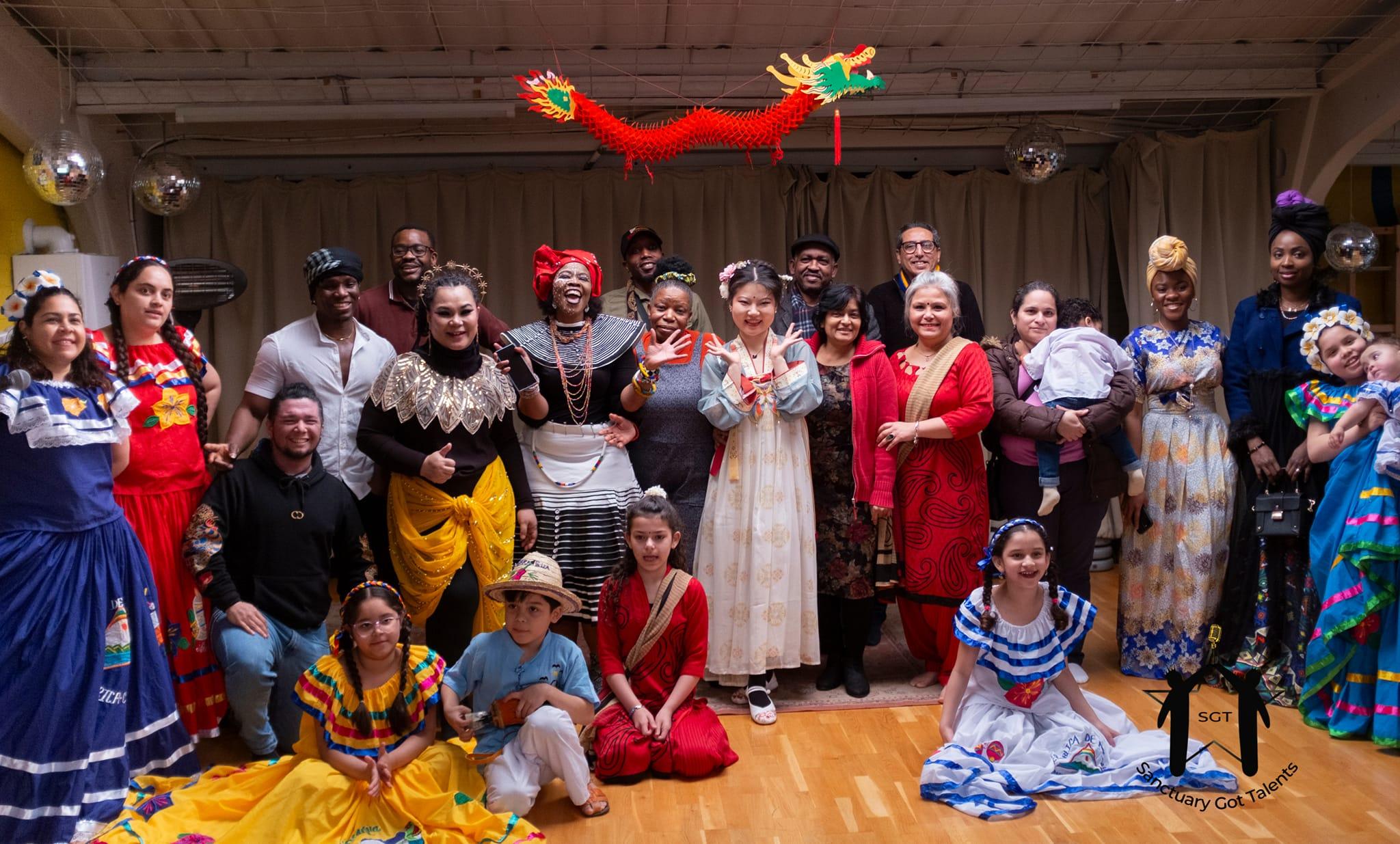
Image credit: Sanctuary Got Talents.
I first began working with a group of sanctuary-seeking women in Leeds in 2016 after being diagnosed with HIV. I voluntarily joined groups like Sanctuary Leeds, music groups, Being You Leeds, walking groups, cooking groups, and founded my own group, Hopeful Hearts Community Group, a diversity group where everyone is welcome. Migrants meet and know each other because we all share a connection as asylum seekers or refugees. These groups help because most of the time we are in distress from not being able to work and thinking of the families left behind. I created Hopeful Hearts so that anyone going through hard times has a place to speak out and is signposted to the right support. Sometimes, people don't have access to food, clothes, or mobile phones, or are not registered with a GP. Having a welcoming space helps us to get help.
Organising began with something simple but radical: creating a space in a playhouse to showcase our talents. In a group called Sanctuary Got Talents, we sing, read poetry, act, and do traditional dances, in one of the spaces in Leeds Playhouse. The Playhouse is the world's first theatre of sanctuary and is dedicated to offering a safe, welcoming space offering practical support and creative projects for refugees and people seeking asylum, where women can speak openly without fear.
In our conversations, a pattern of stories emerged: mould, broken heating, pest infestations, unsafe locks in our homes, and the emotional toll of feeling unheard when we reported these issues. These were not isolated experiences, they were systemic failures. That moment of recognition was the spark. We decided we wanted to act collectively, not individually. For most of us, we weren’t just dealing with poor living conditions, but the sense of powerlessness that had been reinforced over time.
Campaigning for living in dignity
We began by mapping power together – a strategic tool used by organisers to identify key decision makers, influencers, and stakeholders who hold the power to change conditions. Who controls housing decisions? Who funds the contracts? Who has influence? Who are potential allies? This process helped the group see that while we didn't hold institutional power like central government bodies, international agencies and judicial structures, we held something equally important: lived experience, moral authority, and strength in numbers.
Together, we drafted a collective letter outlining the issues we were experiencing and requesting a meeting with the housing provider (companies like Serco and Mears who are contracted by the Home Office to provide accommodation to people seeking asylum in the UK). Instead of sending it individually, we signed it as a united group. That shift from ‘I’ to ‘we’ changed the dynamic immediately. In power mapping terms, it shifts from case to constituency. When you write individually, the housing provider sees you as a case number to be processed, but when you write collectively you become a constituency, a unified group, where it is harder for the provider to ignore that the issue is not just a one-off maintenance problem but a systematic failure.
When the provider initially downplayed the concerns, we didn't retreat. We organised a listening event, a planned gathering where the primary purpose is to hear from people, not to speak at them. It is designed to create a space for people to share their experiences, needs, concerns, or ideas while organisers, councillors, community partners, and power-holders listen actively and respectfully. The women spoke clearly and powerfully about the impact of unsafe housing on their wellbeing, their children, and their sense of dignity. Their testimonies were grounded, courageous, and impossible to ignore.
With increased public pressure, the provider agreed to review the accommodation and prioritise urgent repairs. In our homes we managed to get heating, bus passes to attend activities in the local area to meet other peers, and several families were moved to safer housing. Regular accountability meetings were established as a specific type of community-focused gathering where organisations, leaders, or service providers report back to the community, explain their actions and answer questions about decisions, performance, or promises made. They are the cornerstone of transparent ethical and community-centred leadership.
For the first time, we felt our voices were shaping decisions that affected our lives.
But the real victory wasn't just the repairs, it was also to have a space to speak out without being afraid that we would get into trouble, it was the transformation within the group. Women who had once felt silenced began leading discussions, challenging decisions, and supporting others to speak up. We realised that organising wasn't just about loud confrontation, it was about strategy, solidarity, and refusing to be invisible.
What I Learned
Throughout this journey, I learned that systems assume they know what people need, but it’s the people that understand what must change in their lives. When marginalised, displaced or silenced people are given a safe space to speak, we share insights that no report or policy document could ever capture. The role of organising is not to speak for people, but to honour that knowledge and help create the conditions where our voices can shape decisions. By speaking out about what we are going through, joining meetings that will solve the issues we are facing, writing letters to our MPs, councillors, and our support workers – an individual can be dismissed, but a united group is much harder to ignore. When people come together around shared experiences and shared purpose, they can command attention. They can shift conversations. They can make decision‑makers uncomfortable in the best possible way by insisting on dignity, fairness and accountability.
Understanding power is also essential. Power-mapping helped us to see who influences what, where decisions are made, and how to act with intention rather than only hope. It allowed communities to move strategically, not reactively; and when testimonies were shared publicly in meetings, forums, and rooms where decisions are shaped the impact was undeniable. Stories, when told collectively and courageously, create pressure that institutions cannot ignore.
We also learned that small wins matter. Confidence building, feeling safe enough to speak up, understanding the asylum process, getting connected to a support worker, joining a community group or English as a second language class, feeling heard and respected - each of these things are incredibly important. Every success, no matter how modest, builds momentum. It strengthens confidence, deepens commitment, and reminds people that change is possible. These moments become the foundation for bigger victories.
This work requires patience, trust and trauma‑informed practice. Many people have experienced systems that silence them, so creating spaces where they feel safe to speak and lead is transformative. When individuals who have been marginalised realise they can influence the systems around them, the shift is profound.
Our story is not only about improving housing conditions or challenging poor practice. It is about building a culture of collective power, dignity and leadership. It shows what becomes possible when people come together, recognise their shared strength, and act with purpose. It is a reminder that communities are not passive recipients of decisions, they are powerful agents of change.