Voices
What You Measure is What Counts – Lessons from Harvard
Effectively using and understanding data in organising isn’t just for the scientists among us and can be a valuable tool in creating change in our communities.
Stephanie Wong | 27 Apr 2026
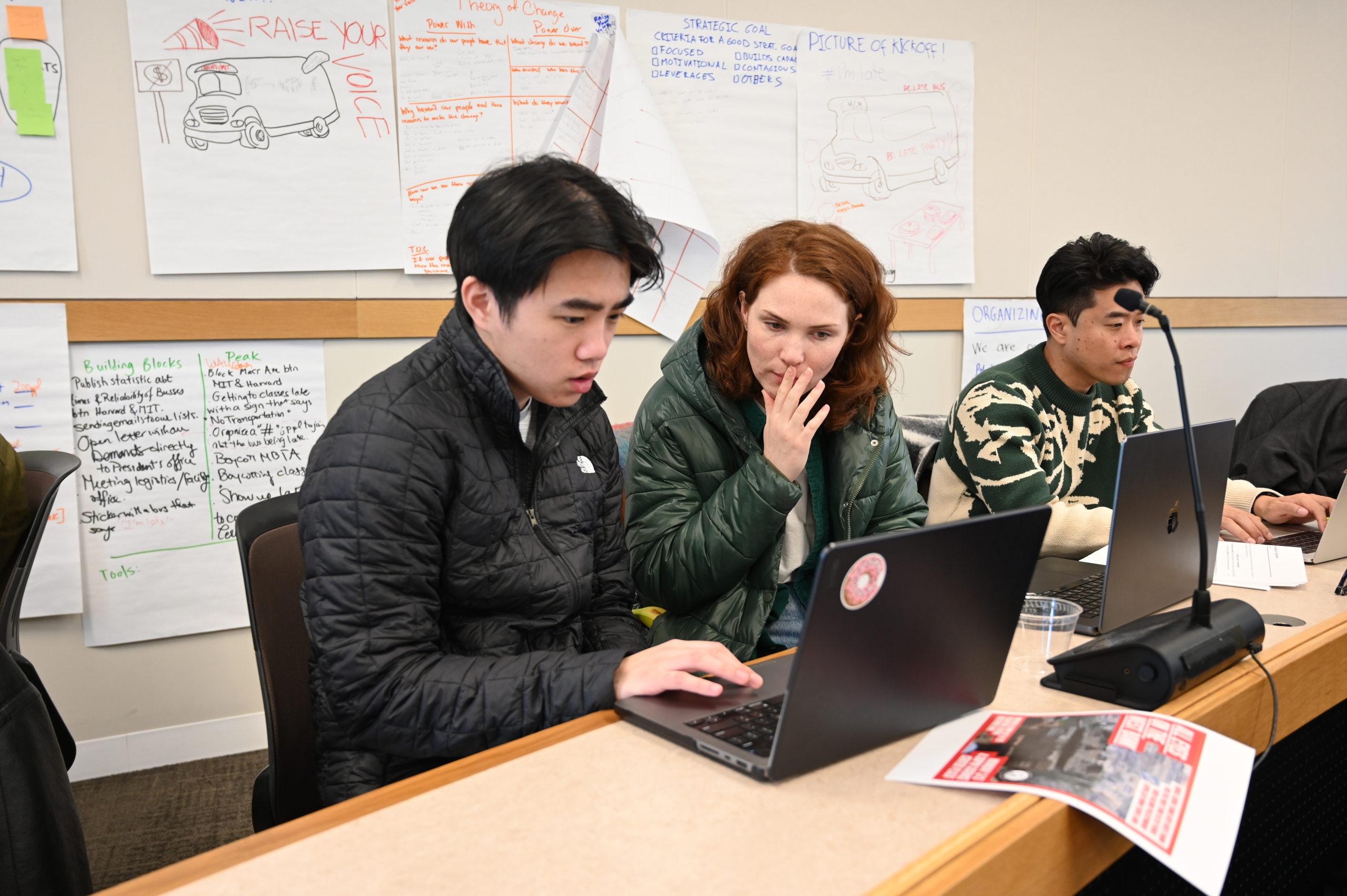
Kevin Wu and Maggie Hughes getting ready to reveal the data of the week.
This post uses affiliate links which means that when you buy an item using the link provided we receive a portion of the sale. Affiliate links are marked with a ⟡
Three years ago, when I first got involved in the Practicing Democracy Project and became a fellow of the organising class at Harvard Kennedy School, I became immersed into the world of data. At first it was like a language I couldn’t understand, and I was frustrated I couldn’t feel the value of what I was being asked to engage in. Frankly it felt like an annoying addition to already challenging work. But just like learning how to read music, once you get the basics, data can be its own specific storytelling world.
Working alongside the brilliant minds of Emily Lin, Maggie Hughes, Liz McKenna (co-author of Prisms of Power), and of course Marshall Ganz, I began to be able to see what the data was telling us in our class. I could see when a team was exaggerating relationships and in fact mobilising. I could coach better. I could celebrate second tier leadership. I could grasp with more clarity whether or not we were building real people based power.
Over the years the team and I worked to ensure data became not an add-on in the class, but a core component of our teaching. I want to thank that team for their patience in me as I struggled to learn. Now I am one of the biggest advocates for why this is so important. In a world where we are forever being turned into data points, this class has taught me how, when done with care and accountability, data can build the capacity of our human connection for a more effective democracy.
At Act Build Change, we are now integrating data for the first time in a real way. We are using data not for funder reports, but for our own learning and the learning of our members. It is making us more effective to reach our mission. Data is not about counting things, it is about building greater capacity. We know whether our organisers are having real one-to-ones, agitating action and supporting the growth of leadership teams to take effective action. None of that is easy and requires new ways of working. And sure there is friction, but the more we get underneath the why of what we are doing – that we want to build powerful teams who are effective at winning real change in the world – it becomes easier.
Understanding the power of data has been one of the biggest transformations for me as an organiser over the past three years and our goal at Act Build Change is to support more organisers be able to use its potential. It is still early days for us, but these lessons from my Harvard colleagues and student, Zainab Azim, have supported us to take this leap.
Data is our people
Zainab Azim, a Teaching Fellow at Harvard and my former student, was initially sceptical of data at the start of the course at Harvard. However, Zainab went on to become one of our data teaching fellows on the course she graduated from, has supported me to grow and flourish in my own role and became a field organiser for the successful campaign to elect Zohran Mamdani as New York mayor.
Zainab shared their story of the Mamdani campaign in class, to support our students to see how data is a reflection of what you care about.
On her first day on the campaign, Zainab met with other campaigners for a day of door-knocking in a local cafe. One high-schooler stood out to her – he was the only one of the group not on his phone. She began a conversation with him. He told her he had moved to New York with his family from Guinea less than a year beforehand. His parents couldn’t vote and yet he had journeyed over an hour and a half on the bus to take part in the canvasing session that day. Speaking together in French, Zainab asked why he had travelled such a long way to join them, especially on a Saturday morning.
‘I just want to learn’, he said, but Zainab challenged him to be more specific (what we call agitation in organising). He could have learned from books or online videos. He had heard about Mamdani and the campaign from a teacher who taught about democracy. The second thing he said surprised Zainab: ‘rent’.
‘Do you pay the rent?’ she asked.
‘No, but my parents do,’ he replied. Zainab questioned his experience of rent costs. ‘I never get to see my dad anymore. We came here for a better life but my dad is working day and night so we’re not on the street. I just want to be with my dad. That’s why Zohran’s my superhero, he’s going to fix it’. Zainab pointed out that he was the superhero for using his time, his two feet and the multiple languages that he speaks to meet people and fight for a better future.
At that moment, something clicked: ‘I can’t lose this kid.’ If I don’t write down his information, he will be lost and his leadership would not be invested in – someone may have noticed him later on, but that is not certain.
If you did a poll of this high-schooler you would only get the information of ‘he cares about cheaper rent’ rather than the whole picture. Organising is about experience, values and feelings, things that can’t be captured in a poll. This high-schooler’s story is the human level experience of what moves people to go out and get involved. When we take our people seriously, document their growth and contribution, we build power. It is how movements are made.
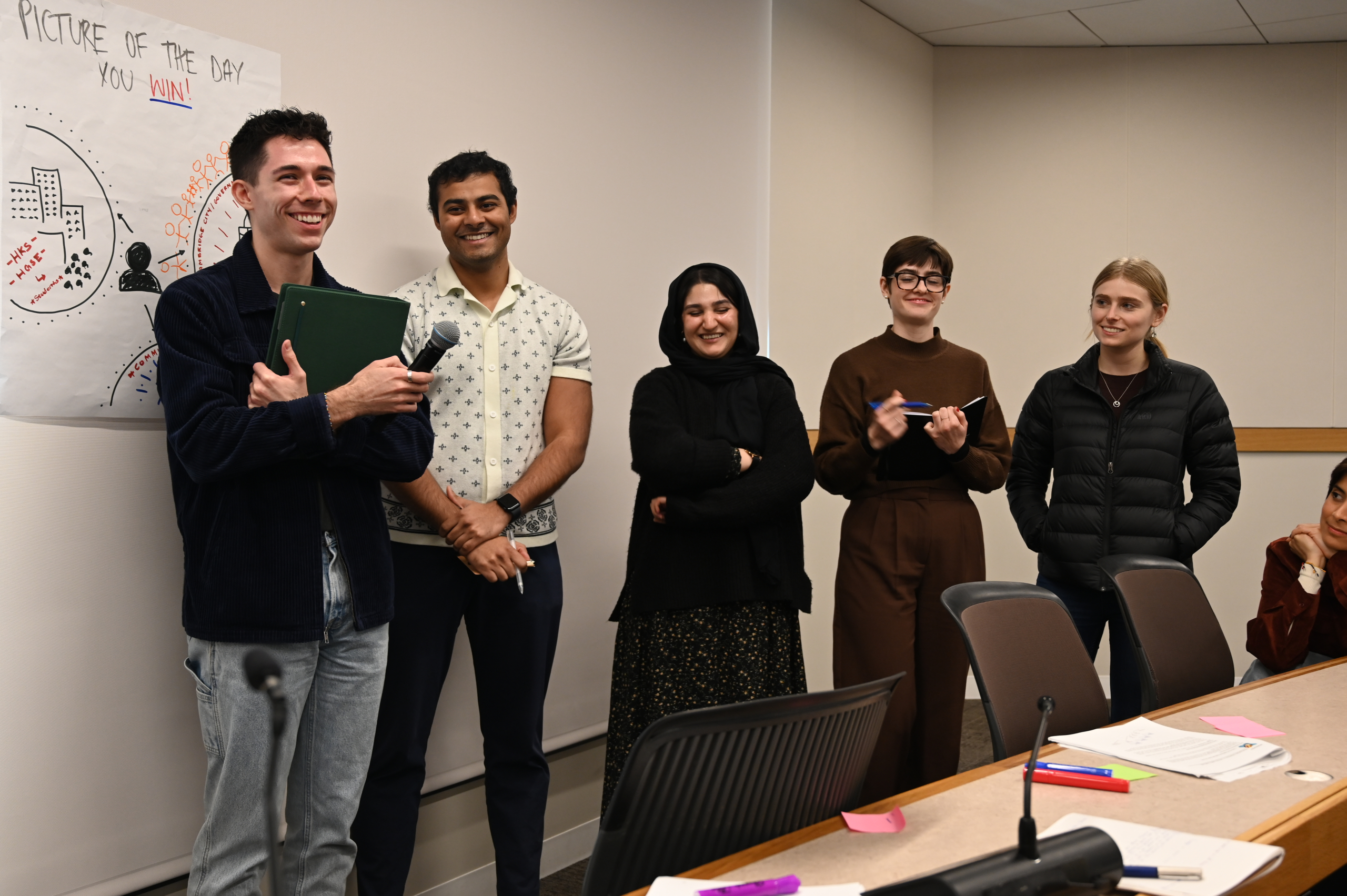
Why is data important in organising?
People do not volunteer because it is easy. People volunteer because it is valuable to them and the people or planet they care for. When we ignore taking note of what people value, how people do or do not show up, we lose the possibility to learn and grow real power. It is where you can see what's happening and celebrate it and where it is not happening and how to correct it. Data is fundamental to getting good at this craft.
Marshall Ganz tells a story that demonstrated the importance of data from when he organised with farm workers in the 1960s. Pre-internet, they collected data by making notes on yellow legal paper and 3x5 cards. One day, when speaking to an organiser who had lost their cards, Marshall asked them, ‘Are those cards you’re losing?’. The organiser looks at Marshall and Marshall corrects them and says, ‘No you are losing people. You are losing people all over the place’. Each card was a human being who would make the movement possible.
Data in organising is anything that documents the nuances of how we are building relationships, the numbers of people we have to where we need to get to. It reveals what people care about, their resources, whether they bring people or not and tells a story of their leadership development. You can measure how many people showed up and how many committed. If the numbers are off that tells you something important. If you expand on those numbers by asking who made that happen, why, and how, you learn better strategy and commit to real leadership development.
Organising includes lots of collective decision-making, moments of struggle and challenges to overcome. It requires lots of people, sometimes a very specific number of people, to be able to use what you have to get what you want. Data supports us to find the solutions to those challenges and work through struggle and friction. It can help us to evaluate the effectiveness and progress of our campaigns, removing ambiguity and confusion. When supporting a leader, it can show how much their development is progressing, if you’re actually developing them at all, and prompt change in approach if that’s not happening. Data helps us win.
As organisers, we keep so much data in our heads. Ultimately, there’s only so much information we can retain and unless it’s written down, will get lost. We can end up exaggerating situations or misrepresenting them by relying on our own memory. A crucial detail from a conversation we had about a campaign might be lost because we didn’t write it down. Similarly, if information is documented instead of being stored in an individual’s memory, the workload can be shared. The pressure is removed from the one person who has the information to be able to continue the work. It builds collective leadership potential. If that person were ill or unable to continue organising for whatever reason, the people stepping in their place or working alongside them would need to start over again.
When people say ‘data is too hard’ or ‘that isn’t what we do here’, I push back. We measure what counts. It is what we care for. The data is the details, and it is what makes you good at your craft. When we love something, we pay attention to the details. A singer will pay attention to every note. A writer will pour over every sentence and paragraph. A gardener will nurture the tiniest seed until it is in bloom. For organisers, the detail is our people.
Our field does not seem to struggle with collecting data for funders. How many volunteers do you have? How many people turned up to an action? How many people attended a meeting or participated in a programme? We have those numbers to provide to people who could give us money, but what about for the development of our people? When you can attach meaning to the specifics, you can learn.
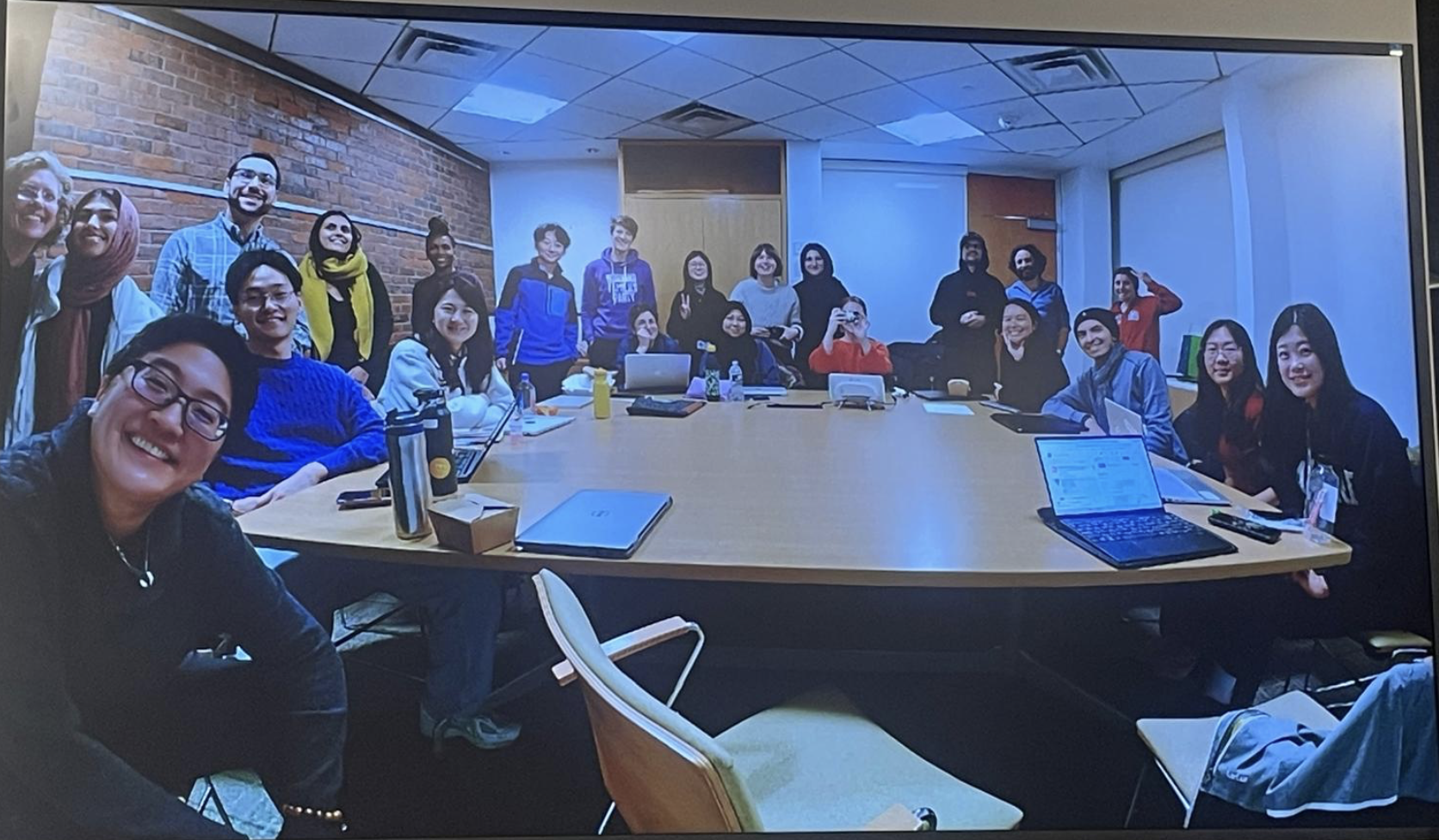
What happens when data is organised well?
Dr. Maggie Hughes of MIT shares how successful approaches to data have enhanced a campaign for a better school system in North Carolina:
‘The campaign is pushing for more funding for the schools, the lack of which exacerbates racial and disability inequality in the area and contributes to the dismantling of the local people’s rights. Organisers on the ground – parents, caregivers, teachers, and students themselves – are building pressure on local representatives for more funding as well as electing effective leaders onto school boards and political allies in the state’s political ecosystem.
‘The organisers in this campaign are pushing to get pledges from primarily caregivers of students in these schools to take action. The quantitative data revealed a challenge between the number of pledges being achieved between two groups. One was doing much better than the other. From this, a coaching conversation took place between the lead organiser and the organiser in the group that was struggling to get pledges. Together, they coached through the challenges that were preventing them from reaching their goals. The conversation notes made by organisers in different groups brought clarity to what was working and what wasn’t. This allowed the coach and coachee to work together to solve the problems. The qualitative data acted as a stepping stone to find solutions and the conversations were not punitive but instead supported people to reach their potential. The coaching conversations resulted in an emotional break where the local organiser shared their feelings of overwhelm and intimidation of the campaign. Using both data and organising coaching resulted in the local organiser feeling less overwhelmed and more confident and reassured in their action. Soon pledges started coming in at double the rate previously, more people got involved in concrete ways, their successes more visible. The pledges snowflaked as organisers in different groups brought in more people who in turn brought in more people, with organisers gaining access to the data they were building. The campaign is now on track for its wins.’
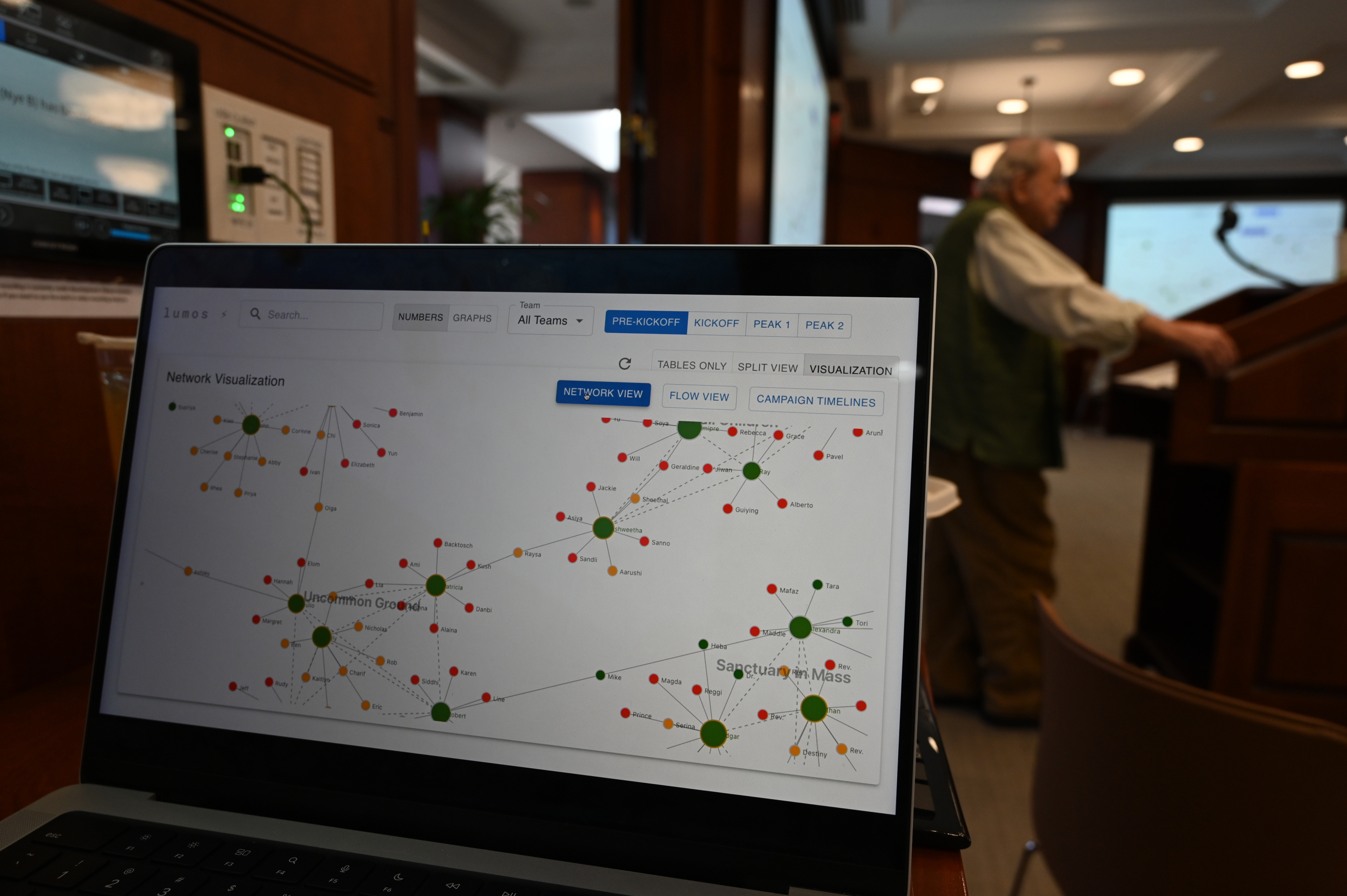
What happens when data is ignored?
A common mistake about data, Maggie highlights, is an organiser saying ‘I don’t need to keep track of things, I’ve got everything under control,’ but then not having explanations for why people didn’t show up to a meeting, event, or action. Without the data you can’t diagnose the problem specifically, and, particularly in large national campaigns, you are left scrambling.
We see this all the time in class. Despite the training and providing coaching support, students will resist engaging with data. Organising tools aren’t always straightforward. There are real concerns around security and keeping people safe. The topic of data security is huge, with so much detail and variation with each new context. We will discuss this further in our trainings. But if we are honest, a lot of the time this is not the case for why we are not writing it down. A lot of the time it is because it is seen as burdensome or arduous. It is also very revealing. And when you know you are not really doing one-to-ones or follow-ups, the data makes that plain as day.
Maggie uses unions as an example of organisations where this can commonly occur:
‘Union organisers are trying to mobilise members to show up to vote in favour of the union, whatever that vote might be for. Several people in the organising team are saying “I’m confident they’re going to do it, they’ll show up, we’ll get the votes and we’ll win.” However, there is no way of measuring or proving that confidence. How do they know they’ll win the vote? Where’s the evidence? What’s the backup strategy? Or as Stephanie says, “organising is not about feeling vibes, it’s measuring the specifics and to pay attention to the details”.
‘Often, the vote comes and the outcome is not in the union’s favour. Organisers are scrambling to figure out what went wrong – the data can reveal it. One-to-ones get a score of one to five and most of the conversations may have been rated five, which translates as amazing, we’re doing great. But, when you look at the real notes made during the conversation, the organiser never asked directly if they would vote in favour of the union or not. What is that rating based on? The disparity between the rating and the qualitative data is huge, and shows that despite significant organising efforts, the organisers are not on the same wavelength of how to go about securing these votes or evaluating information.’
From Harvard to Act Build Change
Our mission at Act Build Change is to make organising accessible for anybody who is experiencing injustice and wants to end it, and for this to be applicable to anyone.
We know our strengths lie in delivering training and supporting organisers in some areas of their practice, including power analysis and team building. However, supporting organisers on data is a gap we have identified in our work, and is something we want to take action to resolve.
We are committed to incorporating data work into both our organising and our training and have made some first steps: to learn more practical steps about incorporating data in your organising, head to our Events and Courses pages to find upcoming and evergreen training on data in organising.
Note:
Lessons from Harvard
This is the fourth in a series exploring lessons from teaching organising during a pivotal moment in American democracy. The first post covered my experiences and issues organisers are facing at Harvard and across the USA, the second covered finding your people and building strong leadership teams, and the third covered moving through fear to find courage.