Voices
How Kent Refugee Action Network is Building Local Solidarity
Lou Roberts shares how KRAN are building the foundations of a Kent-wide refugee solidarity movement.
Dr Lou Roberts | 23 Jul 2026
In recent years, we have seen an increase in refugees being scapegoated and vilified. The result of this harmful narrative has been the rise of anti-immigration protests and riots across the UK, and policies that create an increasingly hostile environment for migrants. Now, refugee and asylum seekers’ allies and supporters in Kent want to connect, broaden and deepen their relationships in the local community.
KRAN realised that to create the enabling environment we want for our young people we need to join forces with organisations and residents in Kent. Real change happens when communities refuse to be divided and stand together. Since 2003 Kent Refugee Action Network (KRAN) has supported unaccompanied refugees and asylum seekers as they have started their lives here in the UK, but have had to adapt to recent years. We worked as part of the Migrant Power Project and were supported by Act Build Change and other participants’ combined expertise on community organising to take the first steps towards that.
Listening with care
Kent is made up of many communities among its varied cities, towns, and villages. Each experiences migration and politics differently and have organised counter protests and solidarity in different ways. Having spent significant time in our communities over the last few years, we knew we needed to map out the risks, networks and resources of each area to better determine what a united approach in Kent might look like. To do this, we had to listen to the people in different areas across Kent.
With support and coaching from Act Build Change, we went across the county to listen to people in their community through three focused listening campaigns. We asked three questions: What are the risks you face? What are your networks? What are your resources?
We asked (1) three groups of young asylum seekers and refugees, (2) the Thanet community, and (3) the Dover community. These listening campaigns shaped Kent’s first regional refugee solidarity conference. We had about 20 participants in each group, and the discussions were passionate and full of hope for a more joined-up Kent. We asked each group the things they are worried about (the risks to them and their communities) and the networks and the resources they have that support them. Below is a summary of the discussions with each group:
- Young refugees and asylum seekers:
- Risks they face: anti-immigration media and politics, social and cultural difference, housing, education, mental health.
- Networks they have: friends, social systems, local communities.
- Resources they have: peace, connections & knowledge, personal, resilience.
- Thanet community:
- Risks they face: anti immigration politics, media and local groups and personalities, refugees and asylum seekers safety.
- Networks they have: local/faith groups, supportive politicians, colleges, art and cultural groups/individuals/businesses, media.
- Resources they have: people, money, skills and knowledge, groups, spaces, diversity and commitment.
- Communities in Deal, Folkestone, Dover and surrounding towns:
- Risks they face: polarisation in politics around immigration, media, fear and trauma, volunteer disengage/burn out.
- Networks they have: support in the colleges, faith groups, business, cultural, and local politicians, but fragmented.
- Resources they have: organisations, venues, funding, businesses, skills and values, community.
After these listening events, we worked towards putting on a welcoming, relaxed and interesting conference rooted in action, with the learnings from the events shaping the discussions that followed.
Can we pull it off?
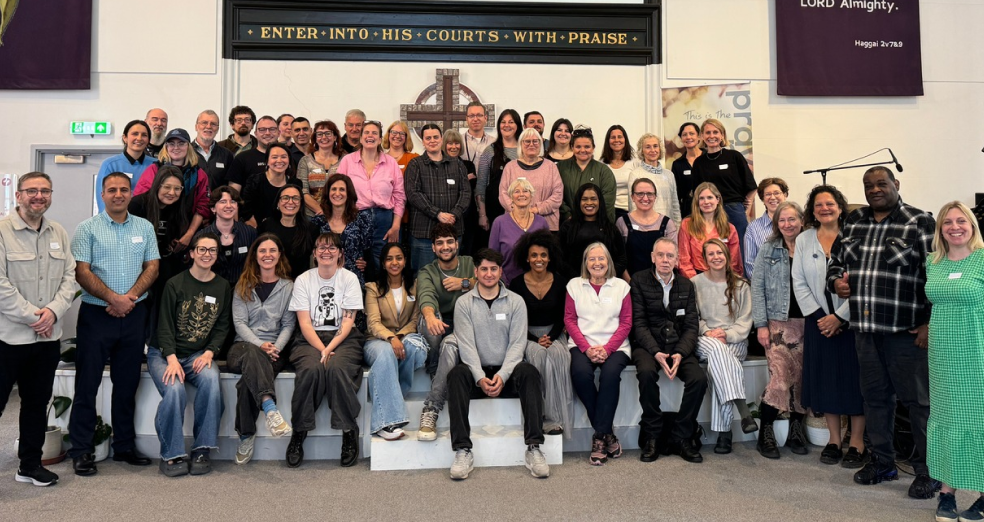
The conference was intended as a space to explore how we can build power and solidarity through having a more joined-up approach. However, we weren’t sure how it would go, or if people were ready to get involved and collaborate. To our delight and relief, we were overwhelmed by the amazing show of community.
The energy in the room was electric. We had 79 participants representing 28 organisations from across East Kent. We had councillors, university staff, volunteers of refugee support groups, English-as-a-second-language teachers, councillors, and more. Between us, we had over 285 years of social justice experience and a staggering 518 years of deep roots in the Kent community. Most importantly, one-third of people in the room brought lived experience as refugees, asylum seekers, or migrants.
Our patrons, Lord Alf Dubs – a Labour politician who arrived in the UK as a child refugee and has advocated for displaced children’s rights his whole career – and Gavin Esler – a political journalist and author – opened the conference with their support and wise words. But what came next really stole the show. KRAN youth ambassadors presented the morning section with incredible bravery. They explained the heavy toll that hostile policies and divisive media narratives take on their mental health, housing, and education. Their message was simple: ‘We want allies who see our common humanity and stand with us.’ This energised the room for the next part of the day where we asked the attendees to work together to agree on what utopia in Kent would look like. We wanted to create a space where we could be proactive in our efforts for a better future, rather than just reactive to the harmful policies and attacks on our communities we have seen.
What’s the dream?
We spent some time thinking big and being courageous with our dreams for Kent and five main priorities emerged:
- Teamwork: sharing our resources and ideas.
- Changing the narrative: fighting misinformation with positive, coordinated stories.
- Building bridges: healing social and geographical divides through community projects.
- Lived-experience leadership: making sure the people affected by the hostile environment are the ones leading the charge for change.
- Collective care: looking after the staff and volunteers doing this heavy, frontline work.
This built the foundations for attendees to work together on their tables to write a ‘statement of solidarity’, starting with ‘Our Kent communities…’ We then gathered these together and voted on the statement we liked best.
Our Kent communities believe that we can create a peaceful, inclusive and just society that celebrates our common humanity.
What a beautiful declaration of solidarity! However, we didn’t want to leave the conference as all talk and no action. We asked people to pledge one commitment towards that statement – something that they could do, big or small, in their own lives. This closed the conference with tangible acts that tie this community together towards the same goal.
What’s next?
It was great to connect with local people and dream big, but that’s not where it ends. We really wanted this event to spark action. And we got it: people in the room said that they left motivated to put the shared statement of solidarity into practice.
We’re already working on the next steps, and have sent out our report of the event to all attendees, asking community groups to arrange the next meetings, and securing funding for a communications consultant to help us work in the best ways with our Kent communities. These relationships will lay the foundations for our work going forward, allowing us to be proactive in building bridges of solidarity across Kent, rather than being solely reactive to narratives of division and anti-migrant protests as they occur.
A massive thank you to everyone who brought their heart and hope to the table. This is just the beginning of working together to be more courageous.